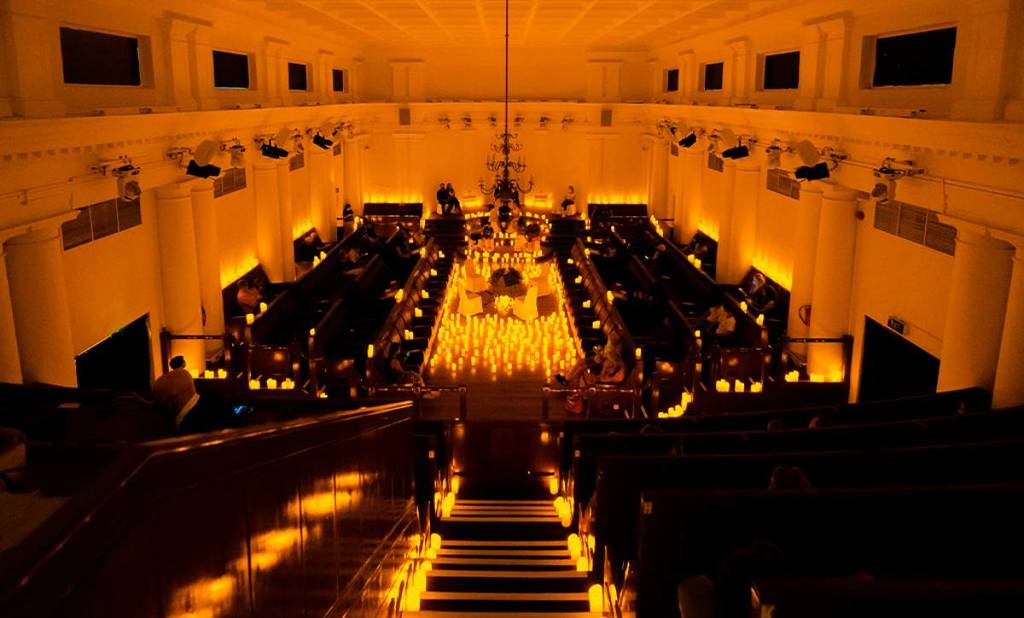

You’ve seen Candlelight in Singapore: that warm sea of flickering light holding a room steady as the music begins. But how does it all come together so perfectly, every time?
Start with scale you can feel. 5,000 candles. Sometimes 15,000 candles. Occasionally 30,000 candles. The count shifts with the venue, but the truth doesn’t: it’s always thousands of candles, candles upon candles, building a quiet intensity you can sense before a single note.
And yet, for all that glow, there’s graft. What looks like ease is hours of careful hands and steady eyes—work you rarely see, but absolutely feel.
Table Of Contents
Behind the glow: the set up
Boxes open, LED candles are unpacked, checked, and grouped so the colours and heights read as one field of light rather than a scatter.
Then comes placement. Lines trace aisles and stages; clusters soften corners; rows mark paths so you move through a landscape of light, not around it. Finally, the room is lit—one candle, then another, then another—until the space breathes.
This is where the effort disappears. In venues like The Arts House, the glow wraps the arches and timber, pulls the eye to the stage, and turns a familiar hall into something quietly cinematic. The music lands softer, the edges fade, and the city outside feels a step away.
To put it in perspective: 5,000 candles feel like 5,000 tiny tea-lights lighting up the room; 15,000 candles become 15,000 points of soft focus; 30,000 candles read like a small constellation laid low—Marina Bay sparkle, without the fireworks.
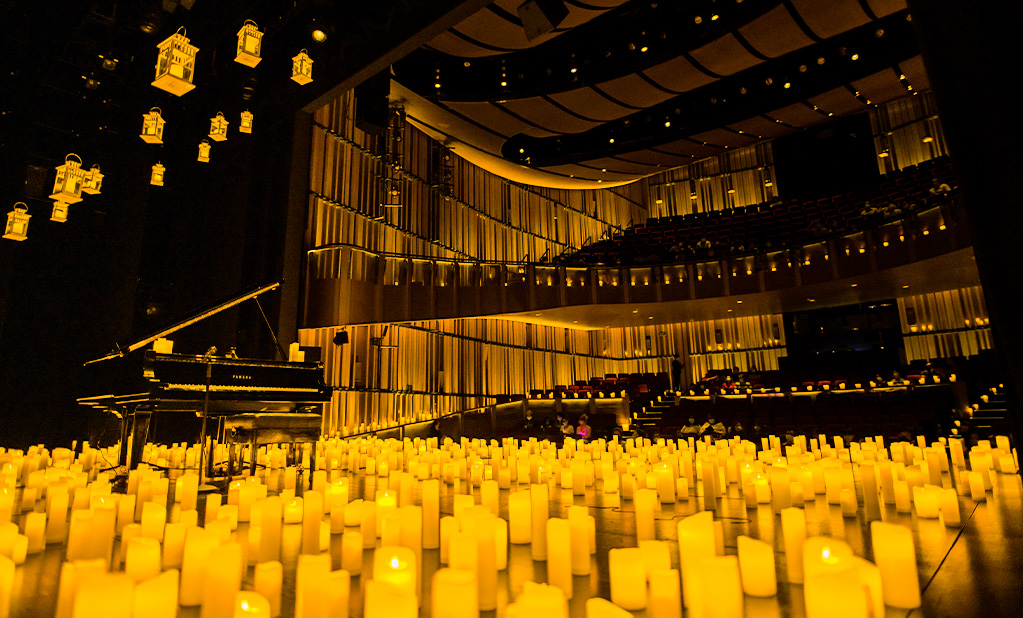
And when the applause settles, it all reverses. Lights out, rows lifted, clusters cleared, every candle packed away so tomorrow’s room can be drawn from scratch. It’s repetition with purpose—set, glow, strike, repeat—so the experience lands just as cleanly the next night.
Maybe you knew Candlelight for the glow. Now you know the care: thousands of candles, placed and lit with intent, turning a Singapore evening into something you’ll remember slightly differently on the way home.
4 November 2026 21:00
CHIJMES Hall
1 November 2026 18:00 + more dates
The Arts House
4 November 2026 19:00
CHIJMES Hall
30 October 2026 19:00
The Arts House
5 November 2026 19:00
CHIJMES Hall
1 November 2026 20:00
The Arts House
5 November 2026 21:00
CHIJMES Hall
27 November 2026 21:00
The Arts House
28 November 2026 21:00
The Arts House
29 November 2026 20:00
The Arts House
29 November 2026 18:00
The Arts House
27 November 2026 19:00
The Arts House
18 December 2026 19:00 + more dates
The Arts House
12 December 2026 19:00
The Arts House
12 December 2026 21:00
The Arts House
24 December 2026 19:00
The Arts House
2 January 2027 21:00
The Arts House