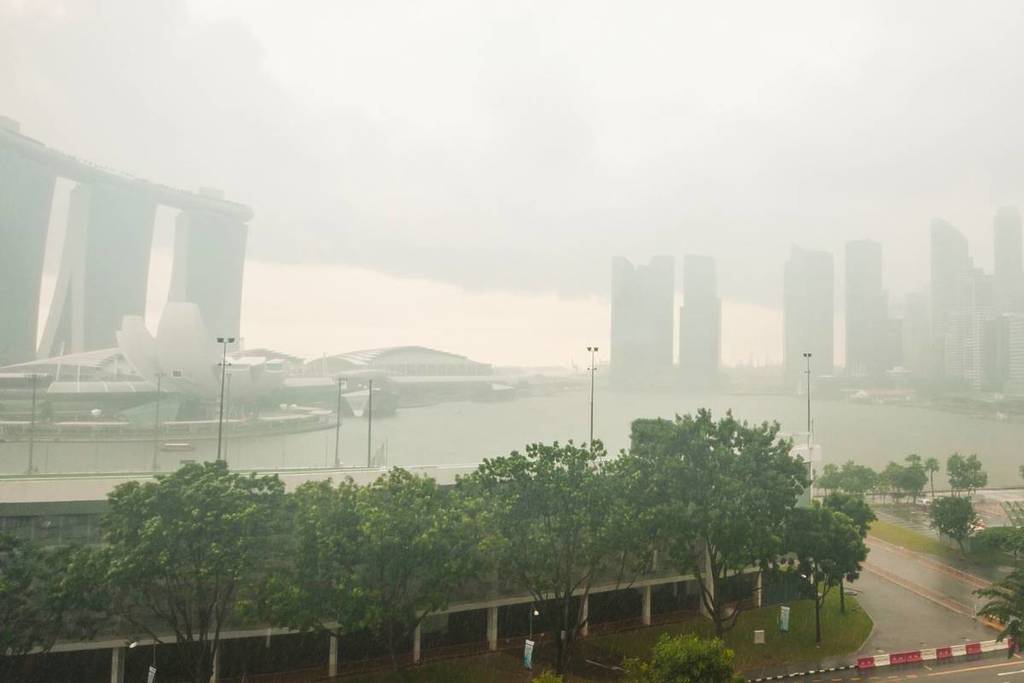
A light but noticeable haze has returned to Singapore. Skies are looking slightly grey and visibility reduced at times. Although, official air quality readings mostly remain in the good to moderate range so far. The National Environment Agency (NEA) has flagged that hotspots and fires in nearby regions, particularly in Johor and other parts of the northern ASEAN, are the main reason why Singapore saw hazier conditions over the weekend. In fact, PSI ranges were between 52 and 63 on Feb 7 and 8. Meanwhile, February is also Singapore’s windiest month, so when regional fires flare up during a dry spell, smoke can travel quickly across the border and hang over the island. Here’s what we know about the haze in Singapore.
Why is Singapore suddenly so hazy?
Experts point to a familiar pattern behind the current haze: land and forest fires linked to agricultural burning and land clearing. This is then intensified by drier-than-usual weather across parts of Malaysia and the Mekong sub-region. Satellite monitoring has picked up persistent hotspots and patches of smoke haze in northern ASEAN, and when winds blow from the north and north-east, some of that smoke is funneled toward Singapore.
Meanwhile, residents have complained that the haze is irritating their eyes and throat the past few weeks. There was also a smoky smell over the weekend. Plus, this haze could pose health risks for the elderly, children, and people with heart or lung disease when levels stay elevated. Therefore, health agencies are advising residents to monitor daily PSI and PM2.5 updates, limit prolonged outdoor activity on hazier afternoons, and keep masks handy in case air quality slips into the unhealthy range.
At the time of writing, NEA’s data shows 24-hour PSI readings within the lower bands. Meanwhile, short bursts of rain have helped to clear the air at times, but authorities are warning that hazy conditions could worsen if regional fires continue or intensify in the coming days.
Forecasts suggest that dry conditions over parts of the Mekong and surrounding areas may persist, which means hotspot activity and smoke haze could stay elevated—keeping Singapore on alert for more episodes. Be sure to stay tuned to official NEA advisories and real-time air quality updates like here.
SEE MORE: Women In Singapore Can Book Free Cancer Screenings Until March 31