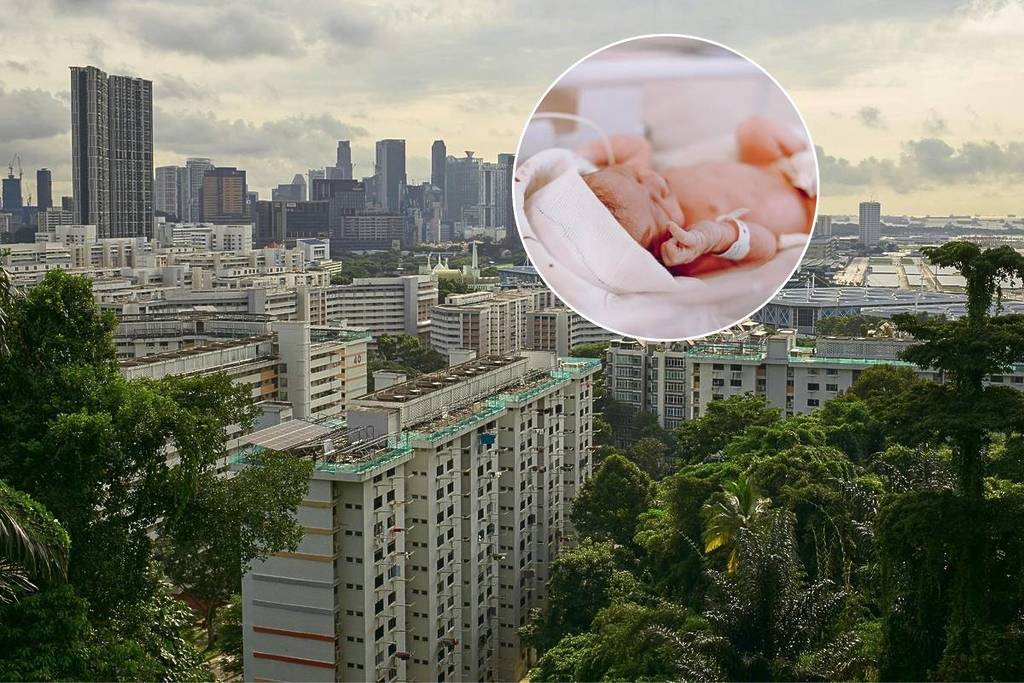
Singapore’s total fertility rate (TFR) has plunged to a new historic low of 0.87 in 2025. This drop is deepening concerns about the country’s demographic future. The latest figure marks a sharp drop for 0.97 in both 2023 and 2024, which is already among the world’s lowest, and is far below the replacement level of 2.1 children per woman. Deputy Prime Minister Gan Kim Yong warned in Parliament that if nothing changes, Singapore’s citizen population could start shrinking as early as the 2040s—calling the trend an existential challenge. Here’s what we know about the Singapore fertility rate.
Why is the record low Singapore birth rate causing concern?
The decline in births is stark: Singapore saw about 27,500 resident births in 2025, the lowest number in its recorded history, and down from roughly 30,800 in 2024. This showcases the shifting attitudes of locals towards marriage and parenthood. Meanwhile, officials say marriage rates have fallen and those who do marry are having fewer or no children, reflecting concerns over costs, work-life balance, and lifestyle preferences.
At a TFR of 0.87, every 100 residents today are projected to have just 44 children and 19 grandchildren, dramatically shrinking future generations. One in five Singapore citizens is already aged 65 or older, up from one in eight a decade ago, meaning fewer young people will be supporting a rapidly growing senior population. Plus, policymakers are warning that over time it will be impossible to reverse the trend as the pool of women in their childbearing years keeps shrinking.
Additionally, it seems the government is leaning more heavily on immigration to keep the citizen and permanent resident Singapore birth rate growing modestly.
SEE MORE: Singapore Has Been Named The Best Culture Destination Globally For 2026