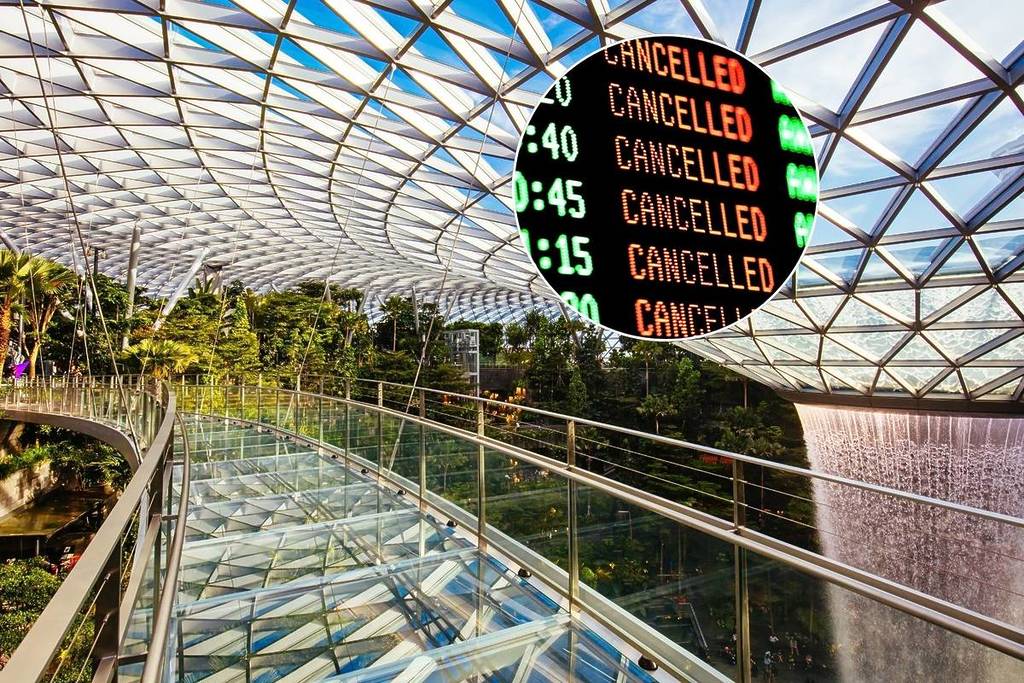
As tensions in the Middle East continue to rise, and the region’s airspace remains closed, Singapore has become one of the key alternative routes for global aviation. Particularly, this is on flight routes between Europe, Asia, and Australia due to major Gulf airports like Dubai, Doha, and Abu Dhabi suspending operations. As of today, airline ticket prices between Asia and Europe have spiked sharply, with many routes fully booked for days as carriers reroute flights or add long-haul legs to avoid affected regions. Here’s what we know about Singapore and other airports as an alternative flight route.
Why is Singapore one of the key alternative hubs for civilian air traffic?
Singapore’s Changi Airport is already one of the major transfer hubs for Asia, Australia, and parts of China with dense regional connectivity via Singapore Airlines, Scoot, and regional partners. Therefore, airlines are shifting Europe to Asia Pacific traffic toward carriers that can provide connected routes through Singapore and other large regional airports due to the Middle East airspace closure.
As tensions continue, airlines that previously relied on the Middle East bridge to connect Europe and Asia Pacific are now forced onto either a northern corridor over Central Asia, or a southern route via the Arabian Peninsula and the Indian Ocean—both of which add roughly 90 minutes to three hours extra to flight times.
Meanwhile, non-stop flights between key Asian cities and major European hubs are seeing a higher demand and a price increase this week. Plus, connection-dependent journeys have been re-routed via cities like Singapore.
Additionally, there are other global airports beyond Singapore that are rapidly becoming alternative routes for air traffic too. These include Istanbul which allows traffic into Southeast Asia, as well as Seoul’s Incheon Airport, Tokyo airports, and both Kuala Lumpur and Bangkok acting as regional dispersal hubs for travellers who would have otherwise flown via Dubai or Doha.
What this means for travellers
The shift through Singapore and other airports means longer journeys, higher fares, and more layovers on routes that previously flowed seamless through the Gulf. Additionally, it is recommended that passengers select the key popular direct routes (although more expensive) to reach Europe from Singapore including flights to London, Paris, Frankfurt, Zurich, and more.
We will update this article throughout the week on Singapore as a key alternative flight route.