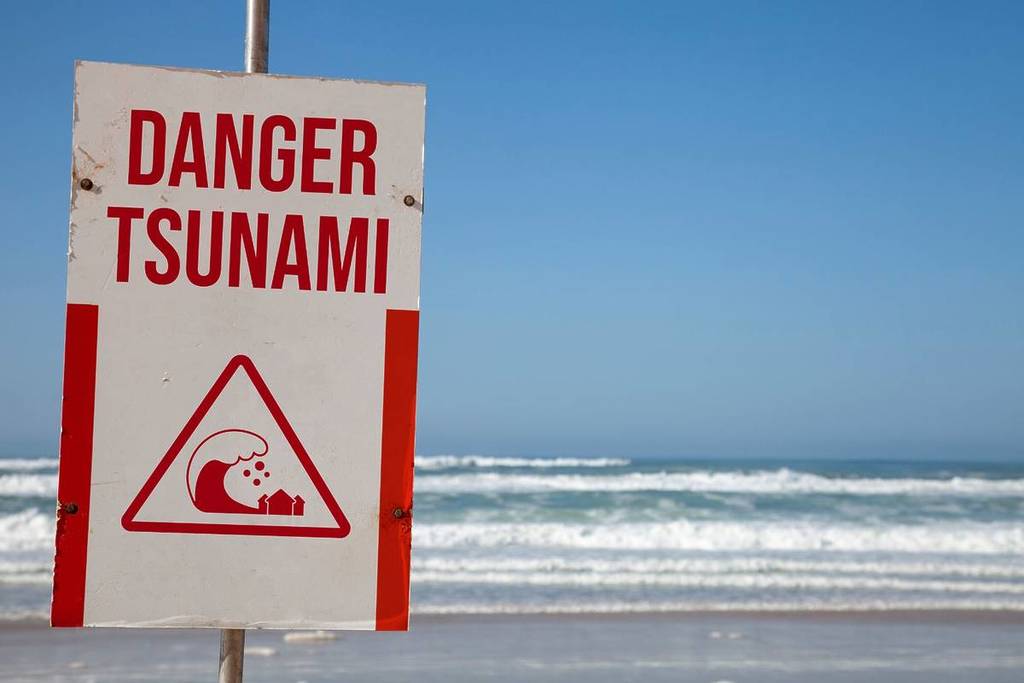
A powerful magnitude 8.8 earthquake struck off Far Eastern Kamchatka Peninsula in Russia on July 30, 2025, sending shockwaves across the world. The quake, which occurred at a shallow depth of approximately 19km, triggered tsunami alerts for vast swathes of Asia Pacific—with advisories and evacuation orders reaching as far as Japan, Hawaii, California, and the Pacific Islands. In fact, the seismic jolt was so intense it set off the eruption of Kamchatka’s Klyuchevskoy volcano hours later which further raised regional environmental alarms. Although, there was no impact to Singapore despite the global reach of tsunami warnings. Read on to find out why Singapore was not affected and what countries were impacted by the July 2025 earthquake and tsunami.
What countries were affected?
In the immediate aftermath, dramatic footage from Russia showed waves as high as 5m inundating coastal towns, displacing boats and flooding ports. Additionally, Japanese authorities reported tsunami waves reaching up to 1.3m, prompting evacuation orders for millions. Meanwhile, Hawaii and parts of the US West Coast also responded with emergency warnings, though most of these have been downgraded as wave heights proved to be less destructive than initially feared. Plus, South American nations including Chile and Ecuador took precautionary measures, closing beaches and schools, but reported no major damage.
Here’s a list of the countries that were affected if you are travelling abroad:
- Russia (specifically Kamchatka Peninsula and Kuril Islands)
- Japan (earthen and northern coastlines)
- Chile
- Colombia
- Ecuador (including the Galapagos Islands)
- Mexico
- Peru
- New Zealand
- French Polynesia
- Papua New Guinea
- The Solomon Islands
- Vanuatu
- United States (notably Hawaii, California, and Alaska)
- Canada (pacific coast)
The earthquake that struck off Russia on July 30 ranked as the sixth strongest earthquake ever recorded worldwide. In fact, it was the most powerful since the 2011 Tōhoku earthquake in Japan. For context, the most powerful earthquake ever recorded was the 1960 Valdivia earthquake in Chile, which reached a staggering magnitude of 9.4-9.6. Other notably powerful quakes include the 2004 Indonesia earthquake for its magnitude of 9.1 which triggered the devastating Indian Ocean tsunami across 14 countries.
Certainly, the earth’s movement off Russia’s remote coast was a cause for major concern across the Pacific. Although, early warning systems, effective evacuations, and the geographical buffer zones meant many regions were spared direct impact and devastating consequences like other natural disasters. See CNN’s coverage of the event below.
Why was Singapore not affected by tsunami warnings?
Singapore’s location, shielded by the Indonesian archipelago and distance from the Pacific seismotectonic ring, places it well outside the zone of tsunami waves generated by the Russian earthquake on July 30. Interestingly, Indonesia acts as a natural barrier for Singapore. Authorities confirmed daily life in Singapore after the earthquake and tsunami remained undisturbed.
Generally, Singapore does not experience significant earthquakes or tsunamis because it is located in a low seismic-hazard region—far from active tectonic plate boundaries and major earthquake zones. Although, Singapore may feel minor tremors from distant earthquakes, especially those originating in Sumatra, but tsunami events are unlikely.
SEE MORE: Is Singapore At Risk Of Tsunami Due To Nearby Underwater Volcanoes?