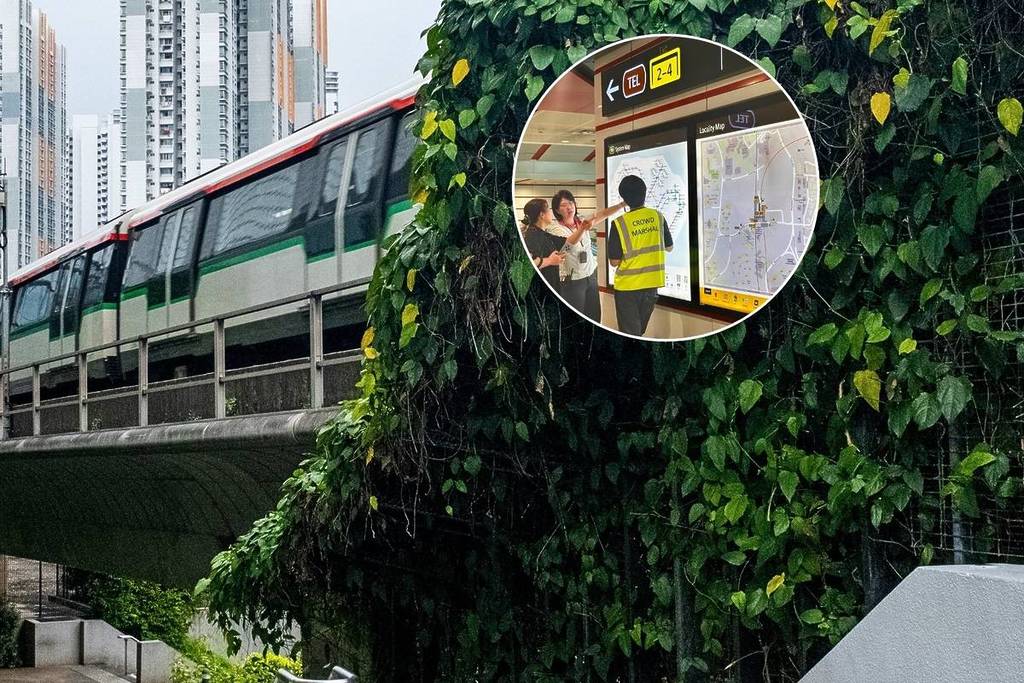

Commuters in Singapore faced a frustrating Sunday morning on May 3 when a major Thomson-East Coast Line (TEL) disruption brought trains services to a grinding halt. The unexpected Singapore MRT breakdown left thousands stranded across the island, as transport operator SMRT reported a severe signalling fault. What started as a localised delay quickly escalated into a total shutdown of the Thomson-East Coast Line. Stretching from Woodlands North to Bayshore, the unexpected suspension left thousands of early morning weekend travellers stranded, sending confused crowds scrambling for alternative routes. Here’s what exactly happened.
What exactly caused the May 3 Thomson-East Coast Line disruption?
The MRT chaos unfolded at around 6.55am, initially flagged as a minor SMRT train delay between the Stevens and Caldecott stations. However, the situation escalated drastically by 8.15am and resulted in no MRT services across the entire TEL in both directions. This meant that stranded commuters were forced to search for alternatives relying on the North-South, Downtown, and Circle lines, or using the free bridging bus services heavily deployed by the Land Transport Authority (LTA) and SMRT to navigate around the disabled stations.
According to SMRT Trains President Lam Sheau Kai, the May 3 2026 MRT fault occurred immediately following overnight systems testing conducted by the original equipment manufacturer Alstom. These tests were part of the crucial preparations for the TEL Stage 5 rail expansion. Unfortunately, trains were held up at platforms as engineers attempted to reset the system which left zero train services between Caldecott and Orchard stations for several hours.
Although, engineers from SMRT and Alstom worked frantically to resolve the massive public transport Singapore issue. This led to a progressive restoration of the line by 11.10am and heavily impacted trains were being manually driven at slower speeds. Following this, normal schedules were officially restored by 1.14pm.
Fortunately, services are now completely back on track but the hours-long weekend breakdown serves as a stark reminder of major technical issues on Singapore’s rail network the past year.