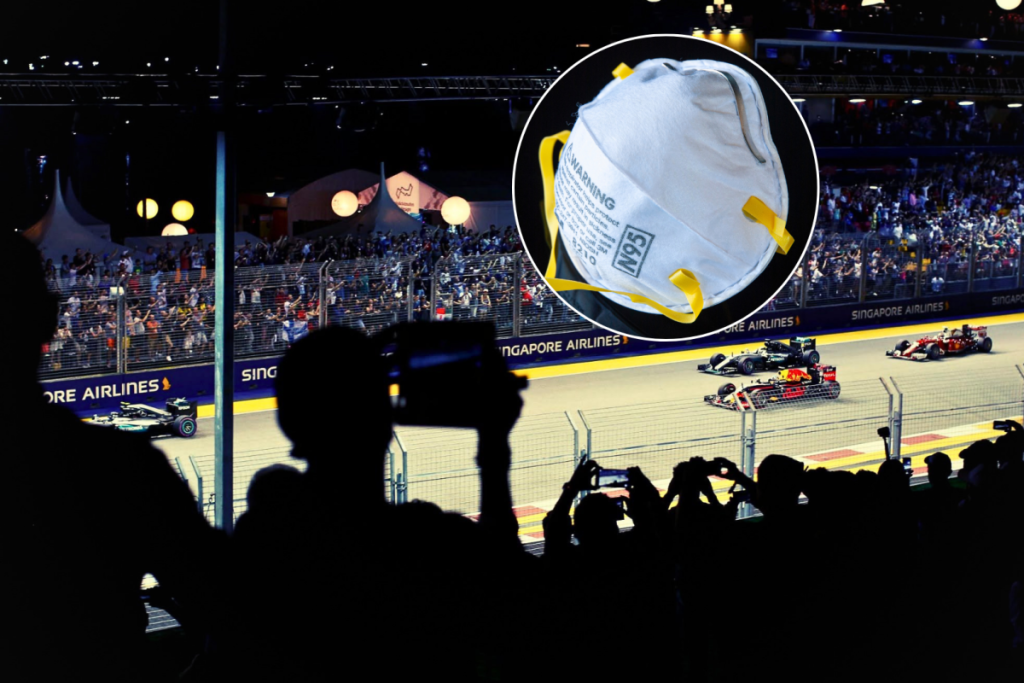

The lead-up to the Singapore Grand Prix is usually all about the roar of engines and the glitz of Marina Bay. But this year the Singapore F1 could be different because of haze. As of today, Singapore is facing its worst haze in seven years, with the 24-hour Pollutant Standards Index (PSI) officially hitting the 150 mark as dense smoke from Indonesian forest fires blankets the island.
In fact, the city-state has not seen smog as severe as this since September 2019 when the Marina Bay Street Circuit was similarly affected by an unhealthy air quality. Fans and teams alike are casting a nervous eye at an increasingly grey skyline..so here’s the haze outlook for the F1 Singapore Grand Prix 2026.
What happens if haze worsens during the F1 races in Singapore?
As the F1 Night Race approaches, the rapidly deteriorating air quality is causing concern. Extreme haze and sweltering weather could trigger strict contingency protocols for both drivers and fans.
We expect race organisers to stock up on N95 masks and closely monitor real-time air quality readings. Plus, drivers are normally permitted to use additional cooling gear to cope with the cabin conditions as part of the heat hazard regulations.
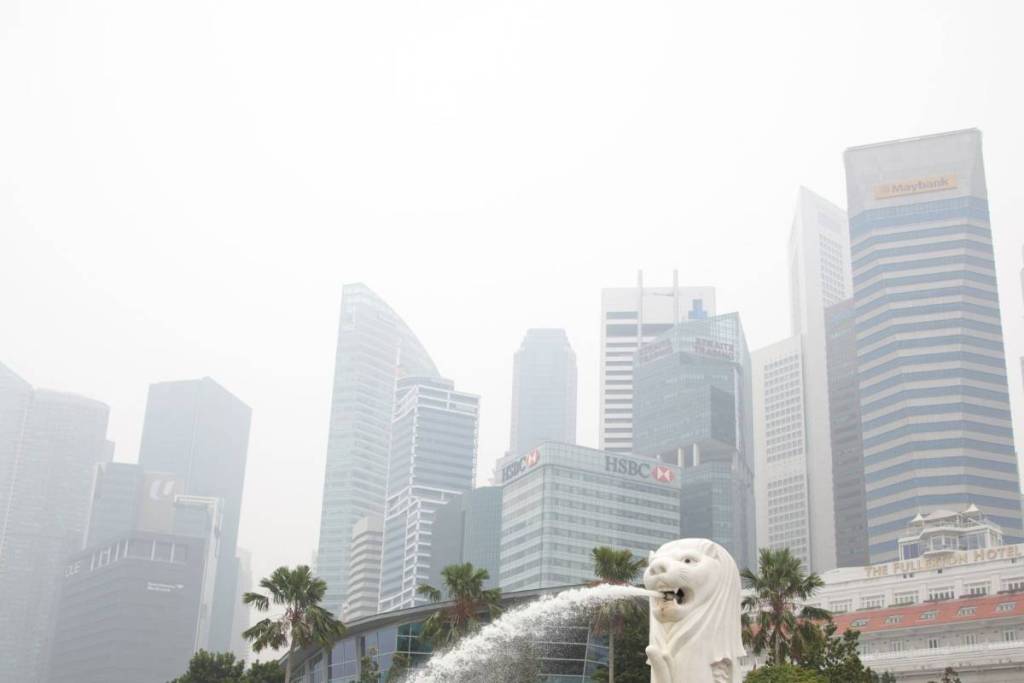
In 2019, race weekend saw a lingering burning smell and visible grey haze hanging over the track. The races went ahead drawing over 268,000 fans. Organizers rolled out comprehensive contingency plans, displaying real-time PSI readings on huge screens, putting first aid teams on high alert, and ensuring N95 masks were widely available at merchandise and medical booths. Certainly, attendees can expect this kind of plan for 2026 if skies don’t clear in time.
If you are heading down to the grandstands, be sure to check the 24-hour PSI forecast and 1-hour PM2.5 readings by the National Environment Agency (NEA). Meanwhile, vulnerable groups (especially the elderly, pregnant women, and those with chronic conditions) should minimize outdoor time if the PSI goes above 100. See our haze protection guide.
Ultimately, the Singapore F1 haze could compromise track visibility and medical safety so racegoers are encourage to pack masks and stay updated on the air quality. More to follow.