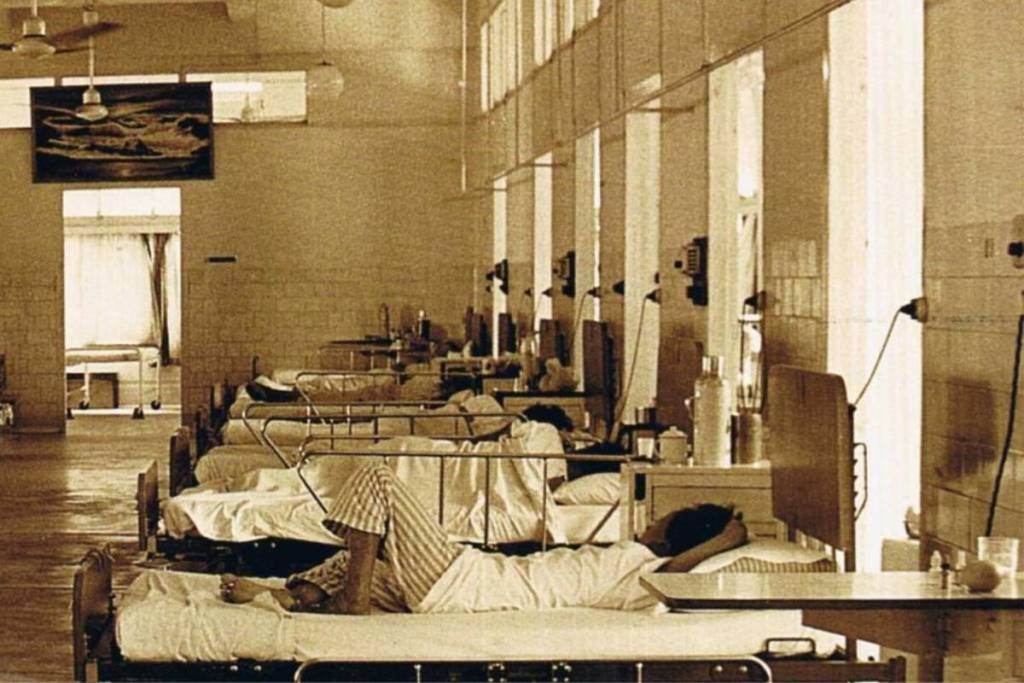

Singapore’s healthcare system is consistently ranked among the best on the planet. Spotlessly clean, high-tech, and incredibly efficient, Singapore General Hospital (SGH) is a globally recognised medical powerhouse today. But rewind a couple of centuries, and this cutting-edge institution looked completely different. In fact, the very first hospital in Singapore was nothing more than a humble wooden shed. Read on to find out more.
Singapore’s first hospital history
Singapore’s first hospital was founded in 1821 as a wooden shed at Bras Basah Road. Located in a British military cantonment, it was mainly used for European soldiers, sepoys, and colonial officials.
But here’s a wild historical fact: the early nurses weren’t medical professionals at all. In fact, the hospital relied on actual prison convicts to do the heavy lifting—so sick patients frequently complained about the loud clanking of iron chains as these convict nurses dragged their feet across the wards.
Meanwhile, early records show there was frequent outbreaks of diseases like cholera and smallpox. Additionally, the entire hospital completely collapsed in 1827 due to material rotting quickly.
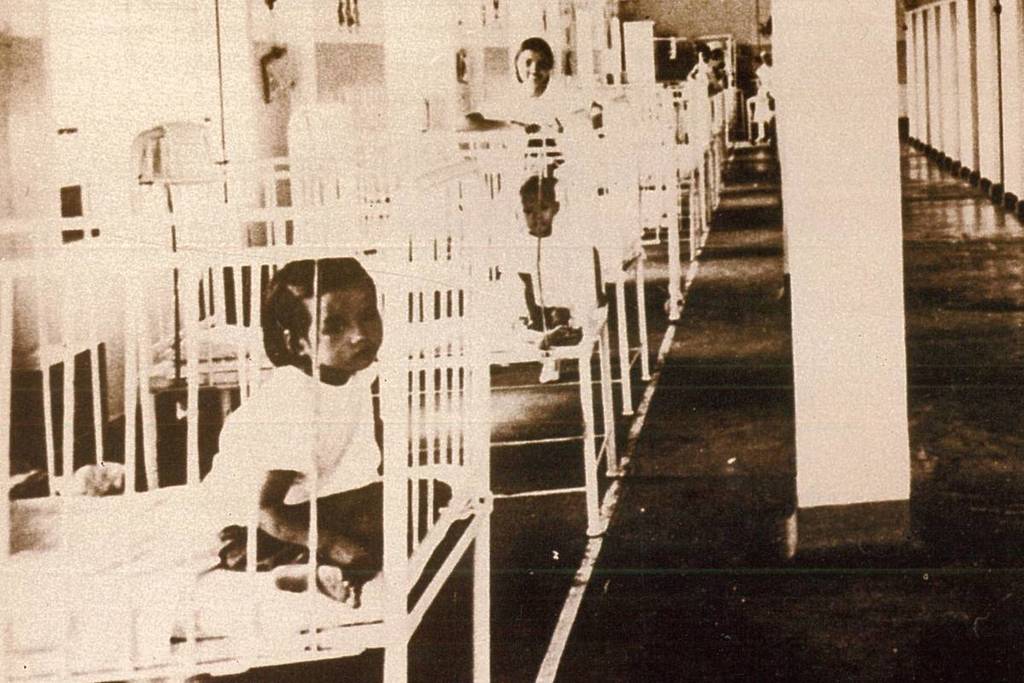
As a matter of fact, this kicked off a chaotic 60-year period of the hospital popping up around the island. Due to poor construction and growing needs, it was rebuilt and relocated several times. By 1845, the hospital had moved to Pearl’s Hill, and then to Kandang Kerbau in 1860, followed by a permanent relocation to Outram Road in 1882. Allegedly, the wooden hospital shed only began to admit women for the first time in the 1860s.
The Outram Road location is where Singapore General Hospital stands today. The site was chosen for its central location and better drainage facilities. This is also the era when professional nursing care was finally introduced, thanks to a group of nuns from the nearby French convent who stepped in to care for the sick.
How did it evolve into a world-class facility?
The modern era of Singapore General Hospital began in 1926 with the opening of a massive 800-bed facility comprising the Bowyer, Stanley, and Norris Blocks (named after doctors who lost their lives during the Japanese Occupation). Crucially, this new hospital expansion made it possible to serve locals of all races and social backgrounds.
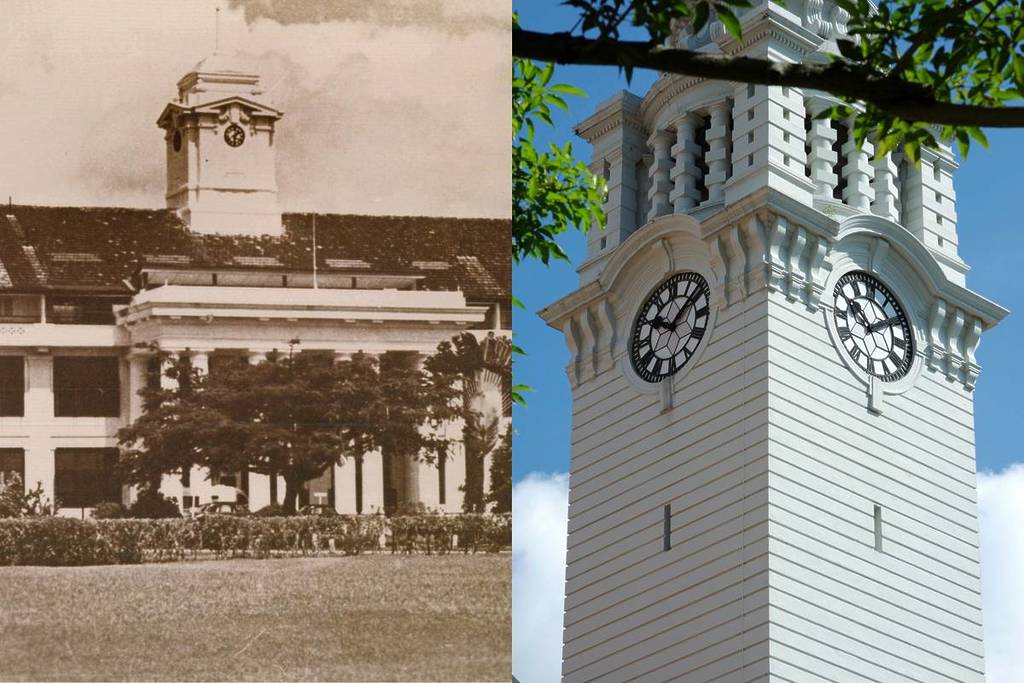
Today, only the iconic Bowyer Block and its striking neoclassical clock tower remain from that 1926 design. Interestingly, it was officially gazetted as a National Monument in 2009 and now houses the fascinating SGH Museum. Meanwhile, Singapore General Hospital frequently ranks among the Top 10 hospitals in the world.
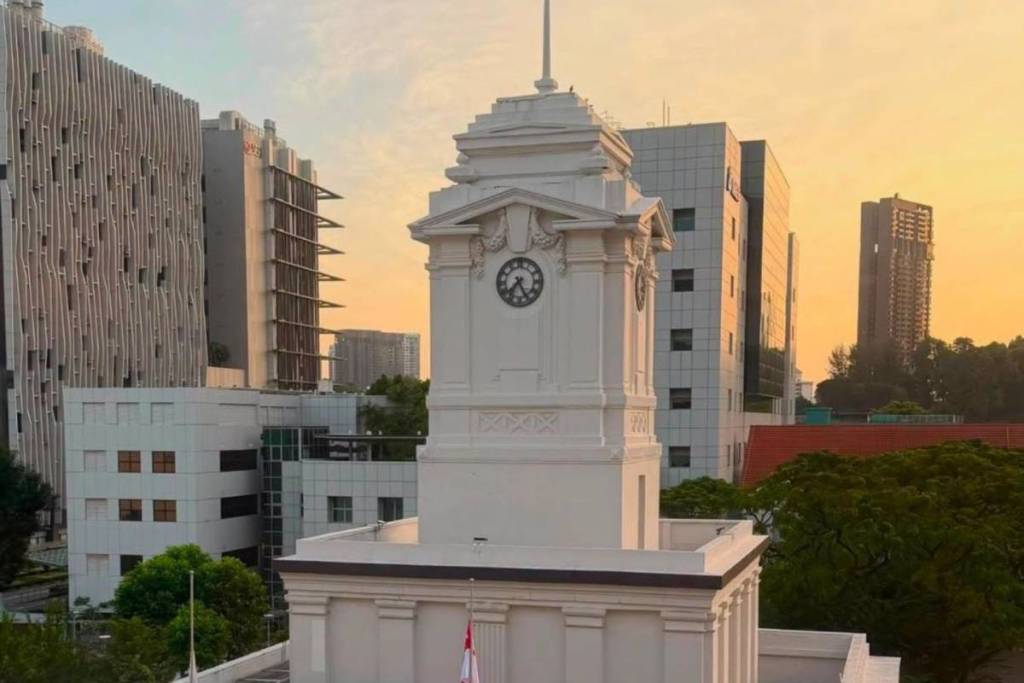
From a collapsing wooden shed staffed by chained convicts to a globally celebrated medical facility…the 200-year evolution of Singapore’s first hospital perfectly mirrors the incredible rise of the city-state itself.