
Singapore has one of the lowest depressive disorder rates worldwide according to a study. Under the World Population Review’s Depression Rates By Country 2026, data drawn from a study three years ago, indicates that the Depressive Disorder Rate in Singapore is currently at just 2.02% per 100,000 people. This places Singapore near the bottom of worldwide rankings, and far below depression leading countries like the United Kingdom and Syria. In fact, our neighbour Malaysia even trails ahead of us with a 4.14% per 100,000 people. Although, these metrics reflect diagnosed and treated cases of depression. Here’s what the data shows us and what the hidden realities are for locals.
Is Singapore really one of the world’s least depressed nations?
According to the report, several factors contribute to this low rate in Singapore. High economic stability, low unemployment, and strong social support networks foster resilience. Meanwhile, culture emphasis on stoicism and family ties may reduce reported symptoms.
Plus, advanced public health systems enables early intervention, alongside government initiatives like mental wellness programmes in schools and workplace to protect youths and stressed adults. Additionally, post-COVID efforts have further prioritized youth mental health.
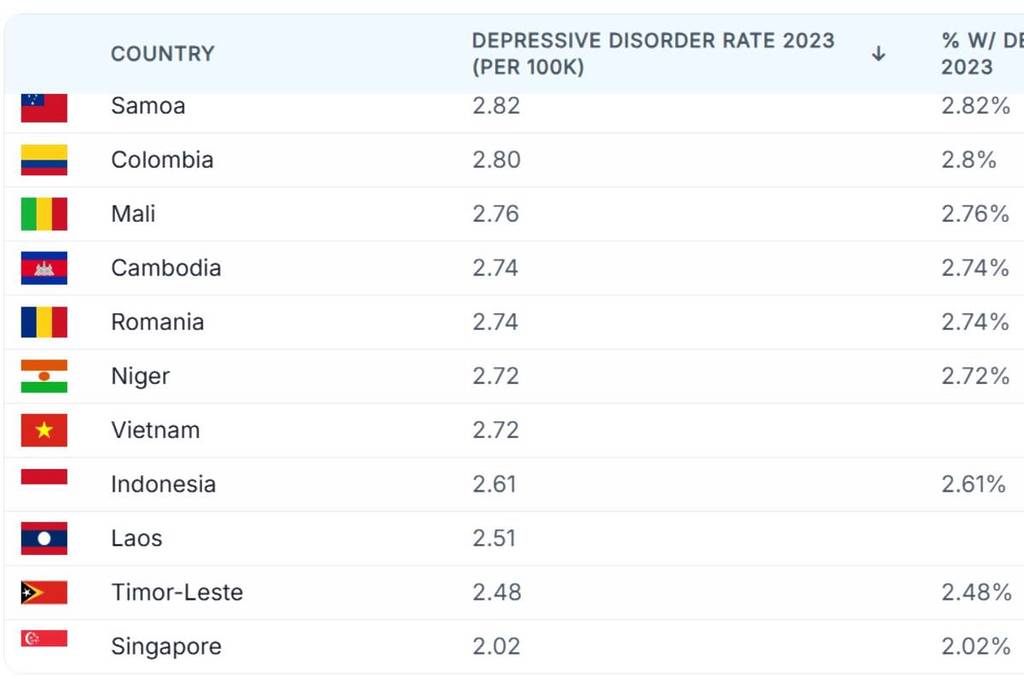
However, it’s important to take these findings with caution as they only measure treated depressive disorders via GBD models. Therefore, there is probably many undiagnosed cases in Singapore and other nations across the world.
Furthermore, recent local studies paint a different picture: major depressive disorders prevalence in residents. From rampant work stress leading to burnout to sky-high living costs, fuel increases, and the pressure of silencing personal struggles…the data needs a deeper look beyond the accessible numbers. So the World Population Review may show a different image of mental health in Singapore, especially where anxiety and hidden strains remain significant.