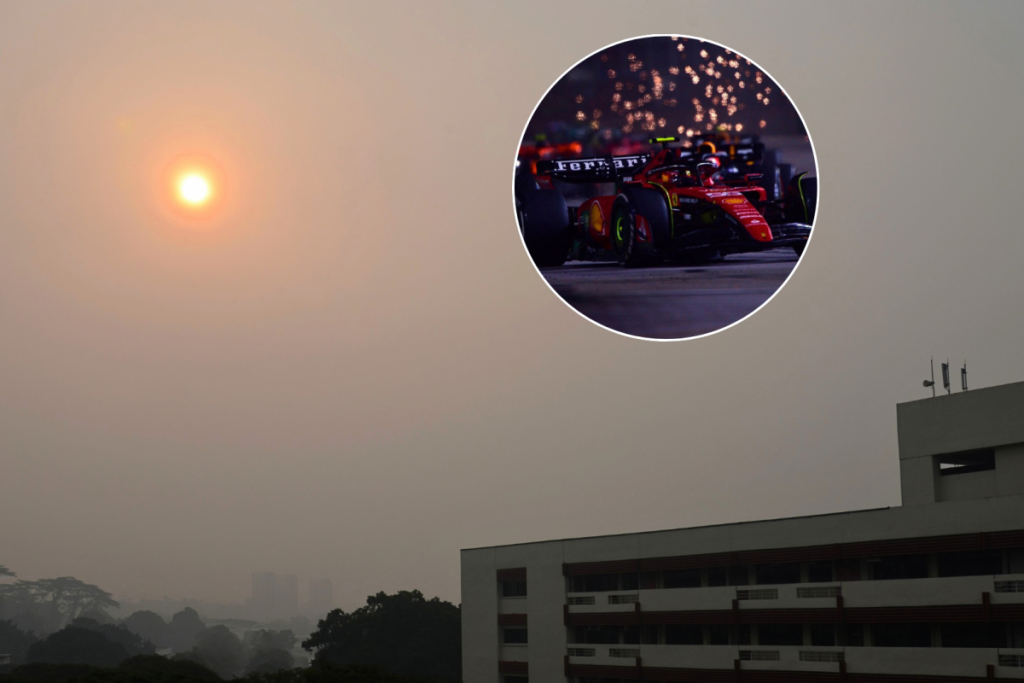

Singaporeans woke up to severe haze again this week and the city-state briefly claimed the unwanted title of the world’s most polluted city on October 7 and 9. Singapore’s Air Quality Index spiked well past the 200-mark into the very unhealthy range—surpassing other well-known smog hotspots worldwide. The huge drop in air quality couldn’t have come at a worse time as we prepare for the highly-anticipated Formula 1 Singapore Grand Prix this weekend. Here’s what we know about the Singapore air quality.
Why was Singapore the world’s most polluted city yesterday?
Singapore temporarily topped IQAir’s live global ranking as the major city with the worst air pollution globally on October 7 with a reading of 211. The drastic spike in pollution is driven by the seasonal haze, ranging from agricultural and forest wildfires in Indonesia, specifically Sumatra and Kalimantan.
Meanwhile, the prolonged dry spell and prevailing winds have been pushing the toxic haze into Singapore and Malaysia causing widespread disruption.
According to the IQAir’s Live Tracking, the top five most polluted major cities in the world during this spike were:
- Singapore
- Kuala Lumpur, Malaysia
- Kinshasa, Democratic Republic of the Congo
- Lahore, Pakistan
- Delhi, India
On October 8, Singapore was the second worst city for air quality on the tracker with a reading of 184—just behind Mumbai with a 191 reading.
Unfortunately, the lingering smog poses a serious threat to the F1 night race at Marina Bay this weekend. Here’s the weather outlook for the Singapore Grand Prix 2026. Be sure to read our haze protection guide if you’re heading outside this week ahead.
Update: Singapore is currently the worst city for air quality globally on the tracker on October 9 with a reading of 216. Plus, Kuala Lumpur is in second place with 204. Here’s what to expect if you’re heading to race weekend.