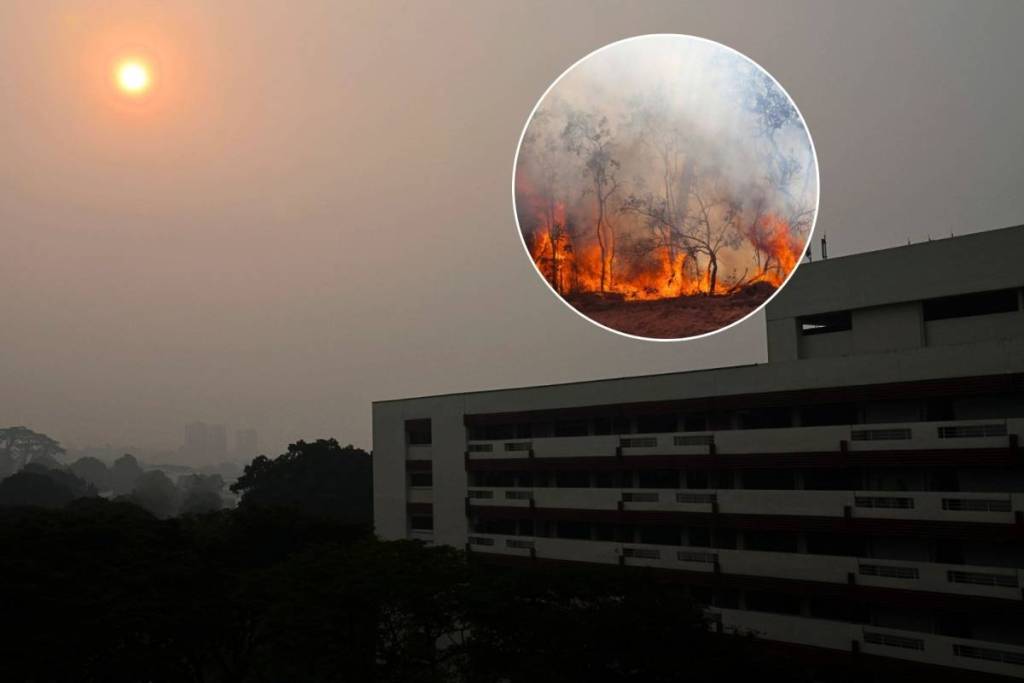

Singapore and its neighbouring nations are bracing for a potentially severe transboundary haze event this year—driven by the menacing return of a strong El Niño. In the newly released Haze Outlook 2026 Report, the Singapore Institute of International Affairs (SIIA) issued a rare red alert for Singapore, Malaysia, Indonesia, and Brunei. In fact, this red alert is the highest risk warning. Here’s what we know about the Singapore haze 2026.
What is driving the 2026 red alert across Southeast Asia?
Meteorologists predict that the convergence of a looming super El Niño and a positive Indian Ocean Dipole (IOD) will trigger an exceptionally hot and prolonged dry season. This combination increases the likelihood of fires across the region’s forests and peat lands, with the worst smoke and air-quality impacts expected to occur between August and September 2026.
Beyond extreme weather, complex economic and market pressures are significantly fueling the fire risk across Southeast Asia. Surging global demands for bio fuels and agricultural commodities have amplified the push for land expansion. Adding to the issue are soaring fuel prices linked to recent shipping disruptions in the Strait of Hormuz.
Meanwhile, financial pressures on cash-strapped farmers might increase the use of cheaper, illegal slash-and-burn methods, which could make uncontrollable fires worse in regional hotspots.
Overall, the red alert serves as a crucial early warning to prepare for deteriorating air quality and potential health disruptions. As we’ve seen so far this year, early dry spells have triggered haze in Singapore and regional fires elsewhere.